
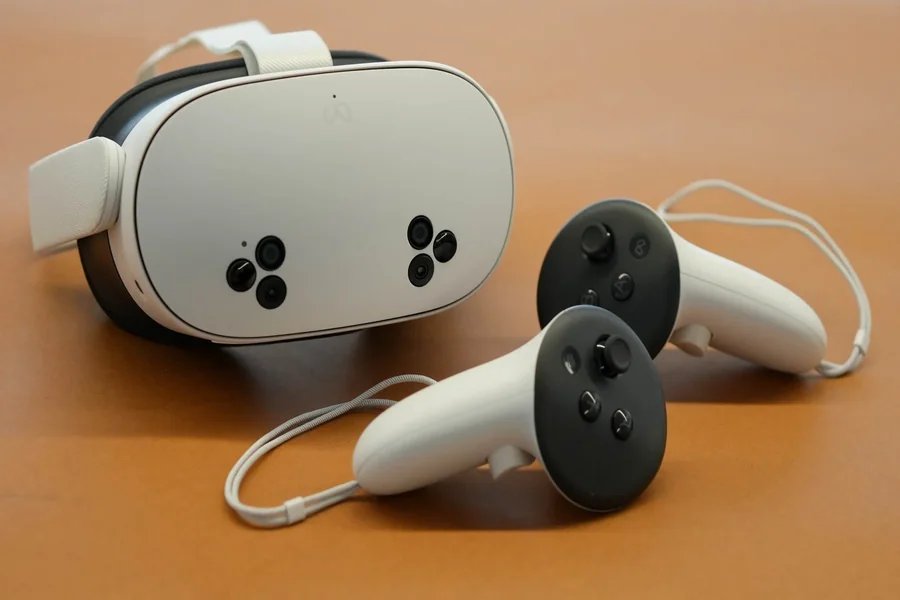
The virtual reality gaming is no longer in the early-adopter stage. The hardware has become mature and the game library has expanded significantly and the entry price has fallen low enough to enable VR to reach a much broader audience. Nevertheless, to make the selection of the right headset, one should still know what makes a really good VR experience and a mediocre one.
What to consider in a VR Gaming Headset.
It is better to get familiar with the specs and features that really count before going into detail on a review of particular ones.
Visual clarity is determined by the number of the resolution per eye. Low-resolution screens have a screen-door effect, in which you can make out the pixel grid. This has been reduced to non-existent with the modern headsets but still, some difference is noticeable amongst models.
Immersion is influenced by field of view. The broader the FOV the more natural a virtual world. The majority of headsets are in the range of 90-120 degrees (horizontal) – the bigger, the better.
Comfort is dependent on the refresh rate. Increased refresh rates diminish motion sickness that concerns a number of VR users. The minimum acceptable frequency is 90Hz and a higher frequency of 120Hz or above is much smoother.
The quality of tracking defines the degree to which the headset will track the movements of your head and controller. Inside-out tracking – the camera on the headset itself tracks without external sensors – has been a common feature, and is very effective in the current generation of headsets.
The aspect of comfort and weight is crucial due to the possibility of spending hours in VR. Heavy or poorly balanced headset leads to fatigue in the neck in a short time.
Meta Quest 3- The Ultimate Standalone Headset.
The headset that offers the best thesis to VR gaming in 2025 is the Meta Quest 3. It is a self-contained gadget that is not dependent on a PC to operate – the computation is done on the headset. The XR2 Gen 2 chip offers a considerable performance improvement over the initial one.
The screen is magnificent with a resolution that brings out sharpness on text and details on the environment. The pancake lens technology not only makes the headset thinner, but also enhances the clarity of the image when compared to the older Fresnel lenses.
One of the outstanding features of the Quest 3 is mixed reality passthrough, the possibility to see your real world but see virtual objects superimposed on it. The passthrough color is actually good and opens new possibilities of mixed reality experiences beyond pure VR gaming.
The touch controllers are easy to touch and tracking is also stable. The battery life is approximately two to three hours of active use which is a disadvantage but can be overcome with the charging provided.
With PC VR gaming you have the option to connect it to a gaming PC via Link cable or wirelessly using Air Link to be able to access the entire PCVR library including SteamVR titles.
PlayStation VR2- Premium Console VR.
The PS VR2 is a second-generation VR headset that is compatible with the PS5 and is an impressive improvement over the first one. The OLED display has a good contrast and black levels. The picture is crisp with the 110 degree field of view making it a kind of immersive experience.
A highlight is the Sense controllers. They have a similar adaptive trigger resistance to the DualSense controller and haptic feedback which provides a touch-sensitive layer to VR interactions. Resistance of a bowstring or collision can be felt, which provides a real depth to the gameplay.
Eye tracking is designed and utilized in foveated rendering – the headset can render the region you are gazing at in as much detail as possible and lower the quality in the area to the edge that you are not looking at. This enhances performance without being obvious to compromise quality.
This is a restriction since it needs a PS5 to work. It does not have a standalone mode and the game library is less than those of PCVR platforms. However, the exclusives are truly spectacular and the experience as a whole is worth the investment by PS5 owners.
Valve Index – the PCVR Enthusiast.
The Valve Index would be the option to make the most out of PCVR enthusiasts who are interested in creating a set of it and spend money to do it. It involves base station tracking whereby external sensors are installed in the room that provide it with very accurate and dependable tracking in a large play area.
The knuckle controllers are one of a kind in VR. They attach to your hand, and follow the movement of each fingers so that you can reach out to something in a natural way and use hand gestures to express yourself in games that are compatible. On games based on this input it is so immersive.
Movement is incredibly smooth with 120Hz refresh rate with an experimental mode of 144Hz. The quality optics and wide field of view makes environments appear believable.
The key weaknesses are cost and complexity of setting up. The entire package with controllers and base stations are costly. Installation involves installation of base stations in the corners of the room. And of course you require a high end PC. But to those users who consider VR quality to be the ultimate quality it is difficult to fault.
HTC Vive XR elite – Well-Built and Versatile.
The HTC Vive XR Elite directly competes with the Meta Quest 3, being a standalone headset which may also be connected to a PC. Construct quality is high and has a high-quality feel that is worth the price.
The battery is mounted on the back of the head that can assist in weight balance- a design feature that makes the headset less straining on the neck than the front-heavy ones. Self-performance is competitive to the Quest 3 but the software ecosystem is less.
The Vive XR Elite is enticing to enterprise users, and those who desire an alternative to the Meta ecosystem. To get a pure gaming value the Quest 3 is the more powerful one at the same price.
Final Thought
The quality of VR gaming headsets will be truly remarkable at every level in 2025. Meta Quest 3 has the best standalone versatility as well as PCVR potential to most users. PlayStation VR2 is the best option to PS5 players who are interested in high-end console VR. Valve Index is still the reference to those who are loyal to PCVR. Depending on your platform, select your budget and commitment to developing your VR gaming routine.
FAQs
Q: Do you need a powerful PC for VR gaming? It depends on the headset. Standalone headsets like the Meta Quest 3 run without a PC. For PCVR headsets like the Valve Index you need a modern gaming PC with a capable GPU.
Q: Does VR gaming cause motion sickness? Some people experience motion sickness particularly when starting out. Higher refresh rates and well-designed locomotion systems reduce this significantly. Most users adapt with regular use.
Q: How long can you comfortably use a VR headset? Most people comfortably use VR for one to two hours before taking a break. Comfort varies by headset weight and the type of experience. High-intensity games are more fatiguing than seated experiences.
Q: Are VR gaming libraries large enough to justify the cost? Yes in 2025. Both SteamVR and the Meta Quest library have grown substantially and include titles with production values comparable to flat games. There is genuinely a lot to play.
Q: Can children use VR gaming headsets? Most manufacturers recommend VR for ages 13 and up due to concerns about visual development and the physical size of headsets. Parental supervision and shorter sessions are advisable for younger users.
